Two Sides of the Same Coin: Why Schools and AI Are Locked in a War Nobody Wanted
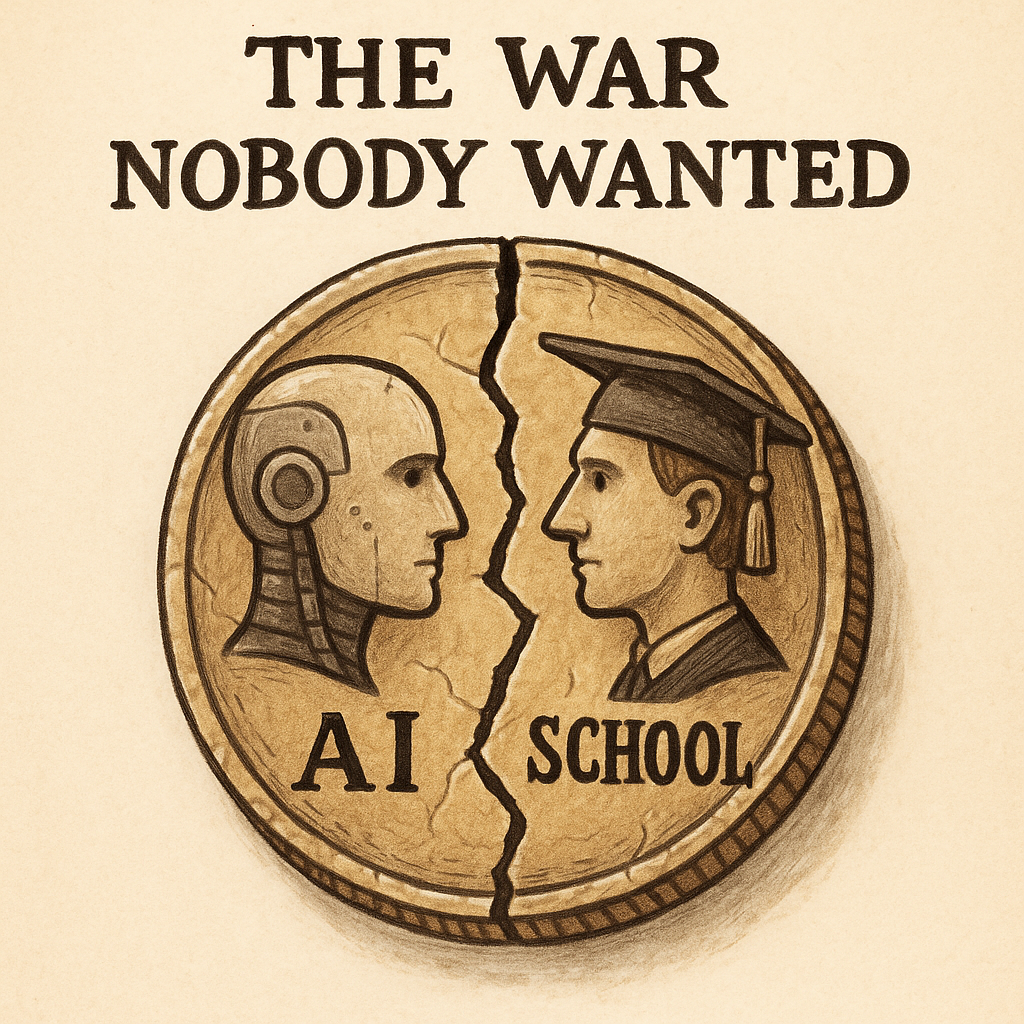
The War Nobody Wanted
AI didn’t arrive to dismantle education — it came as a gift. Engineers imagined a tutor that never tired, never judged, and made knowledge accessible to anyone, anywhere. Schools never set out to fight either — their purpose has always been to cultivate learning, maintain standards, and create opportunity. Neither side expected a war.
And yet here we are.
The clash is born not of malice but of misalignment. AI isn’t out to get education — it optimizes for access, not legitimacy. Schools aren’t trying to suppress innovation — they defend standards that anchor social trust. Students aren’t rebels — they’re rational actors caught between two coherent but incompatible logics of learning.
"This isn't a story about lazy students or moral decay. It's a story about what happens when two fundamentally different systems compete for the same users." — Why Our Students Can't Stop Using AI
Both want learning to flourish, but one prizes frictionless progress while the other prizes validated struggle. Both are right in ways that don’t yet fit together — two sides of the same coin, colliding before they ever had a chance to align.
Misalignment, Not Malice
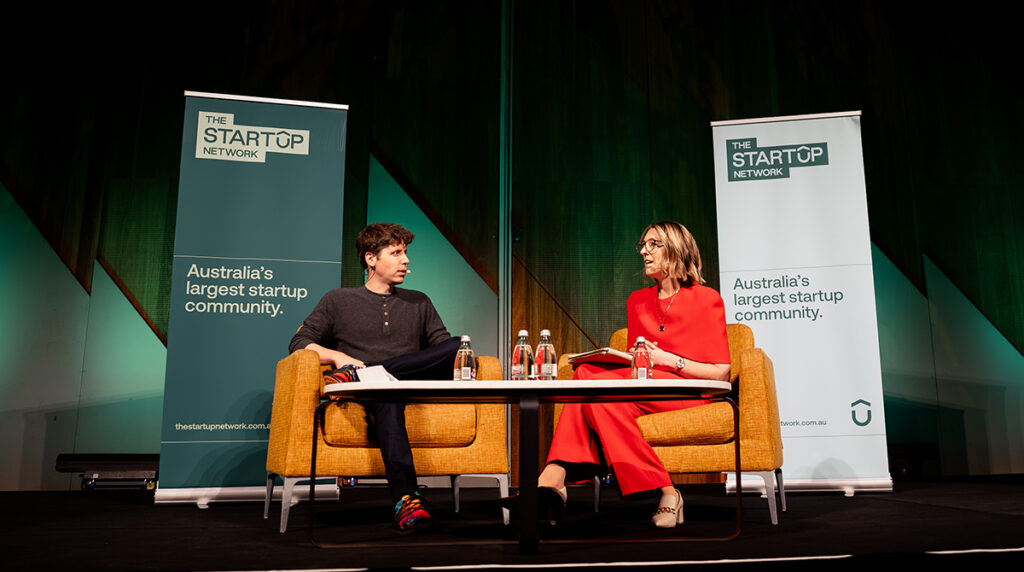
Sam Altman described AI as a universal tutor, leveling the playing field by giving every child the benefits of one-on-one support. From his perspective, this was a democratic ambition — making personalized learning that had previously been the privilege of the wealthy accessible to everyone.
“Most people just can’t afford one-on-one tutoring… If we can combine one-on-one tutoring to every child with the things that only a human teacher can provide, that combination is going to be incredible for education.”
— Sam Altman (2023)
Schools, however, saw the same technology destabilize the legitimacy of their measurement systems, making help look like disruption. What AI framed as equity, education interpreted as erosion.
The tragedy is that both sides are right. AI really could democratize high-quality learning support. Schools really do need reliable ways to validate learning. But these truths exist in tension, and what makes each system valuable threatens the other's foundation.
Why AI’s Greatest Promise is Education’s Biggest Problem (Bloom’s 2 Sigma Problem)
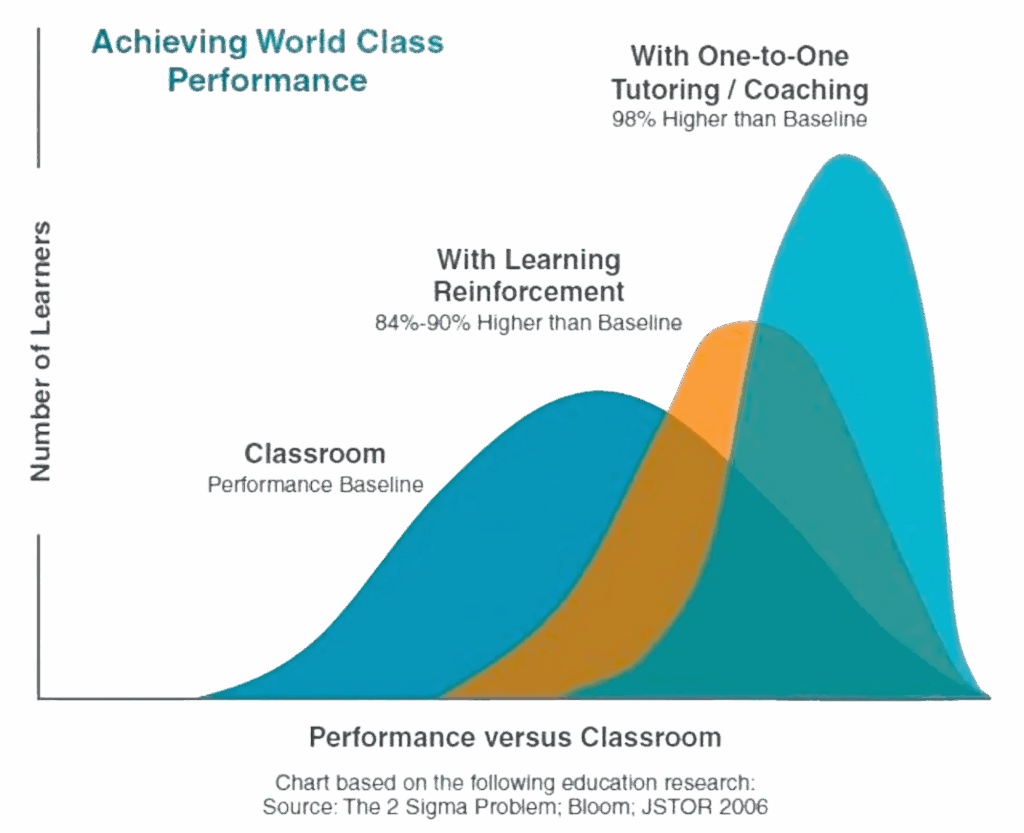
In 1984, Benjamin Bloom showed that one-on-one tutoring could lift the average student two standard deviations above classroom performance — moving them from the 50th percentile to the 98th percentile.
“The average student tutored one-to-one performed two standard deviations better than students educated in conventional classrooms.”
— Benjamin Bloom (1984)
For decades, this potential remained locked behind economic barriers. Tutoring was too expensive, exclusive, and impossible to scale.
AI promises to unlock that potential. It offers the possibility of delivering Bloom’s two-sigma effect at scale, giving every student access to the kind of personalized support once reserved for the privileged few. This is the democratic dream Altman describes — the chance to level the playing field in education.
But with that breakthrough comes a paradox. The same technology that can provide support also makes it possible to replicate the visible outputs of effort at unprecedented speed and scale. A polished essay or structured analysis — once a trusted proxy for mastery — can now be generated with minimal input. It’s not the tutoring effect itself that dilutes signals, but the ease with which effort can be simulated.
Why AI Is Not the New Calculator
Whenever new technologies enter education, the reassuring comparison is quick to appear: “Remember when people were afraid of calculators? Math survived, and so will we.”
The analogy feels comforting, but it doesn’t hold.
| Calculators | AI |
| Automated a narrow slice: arithmetic. Students still had to set up problems and show reasoning. | Automates a wide spectrum: writing, reasoning, analysis, and creativity. |
| Preserved visibility of thinking — teachers could still see steps and logic. | Produces polished outputs with hidden process — reasoning can disappear. |
| Shifted proxies upward (from computation → problem-solving). | Collapses multiple proxies at once (essays, research, fluency, analysis). |
| Left the school system intact — classes, assignments, grades unchanged. | Destabilizes assessment itself, making individual contribution harder to verify. |
The comparison fails because calculators preserved the visible link between student and outcome, while AI can make that link invisible — unsettling how institutions judge student mastery and intelligence.
AI is not the new calculator. Calculators solved arithmetic while preserving education’s measurement system. AI destabilizes the very structures that define proof of learning.
Philosophical Tensions Between AI & Education
Bloom’s promise and the calculator analogy both show that the clash isn’t about whether learning happens, but about what counts as valid proof of it. That’s where the philosophies of AI and education collide head-on.
These tensions might sound abstract — until you realize they all converge on the same place: assessment. The moment schools and AI collided was not in the classroom, but at the point of proof.
| Dimension | Schools | AI | Same Coin Insight |
| Purpose | Legitimacy, credentials | Access, empowerment | Both pursue knowledge, but one optimizes for legitimacy, the other for fluidity |
| Struggle | Friction builds character and proves effort | Friction is inefficiency, to be removed | Both see growth, but disagree on whether pain is required |
| Collaboration | Human-to-human, training for community life | Human-to-AI partnership, training for self-directed exploration | Both value collaboration, but with different partners |
| Success | Endurance, certification, survival of the process | Insight, speed, immediate problem-solving | Both define learning, but validate it differently |
| Change | Defensive, slow, preserving trust | Expansive, fast, shifting paradigms | Both serve learners, but operate on incompatible tempos |
At its core, the conflict is philosophical: schools tie learning to validated outcomes, while AI reduces learning to frictionless access. The two logics don’t dispute whether learning occurs — they clash over what should count as evidence when it does.
Why the Clash Feels Intractable
Schools cannot abandon measurement without losing their institutional authority — their credibility rests on grades, diplomas, and tests as trusted proof of learning. AI cannot introduce friction without betraying its core promise of speed, flow, and barrier-free access.
Each system cannot exist in its current form without rejecting the core value of the other.
The deeper friction lies in their origins. Schools evolved around scarcity — limited expert attention, finite resources, and the need to allocate opportunity fairly. AI emerged from abundance — infinite availability, personalized responses, and the assumption that barriers should be eliminated rather than managed.
No amount of detection software, academic honesty policies, or AI literacy training can resolve a conflict between incompatible definitions of what learning should look like. We’re not dealing with a technology problem or a policy gap, but a collision between two different theories of how learning should be organized and trusted in society.
When Assessment Loses Its Value (Spence + Goodhart)
Economist Michael Spence described education as a signaling system: credentials carry weight not only because of what students learn, but because they are costly to earn. A diploma signals persistence and discipline because it demands years of effort. Essays and exams worked the same way — their value came from being difficult to fake.
AI collapses that cost. Work that once demanded hours can now be reproduced in minutes, and research that once required extensive foundational knowledge can be acquired through a handful of prompts. The effect on education is the same as what counterfeits do to luxury brands: their value comes from exclusivity and cost, and AI-generated content is like producing perfect counterfeits that threaten to devalue the entire market.
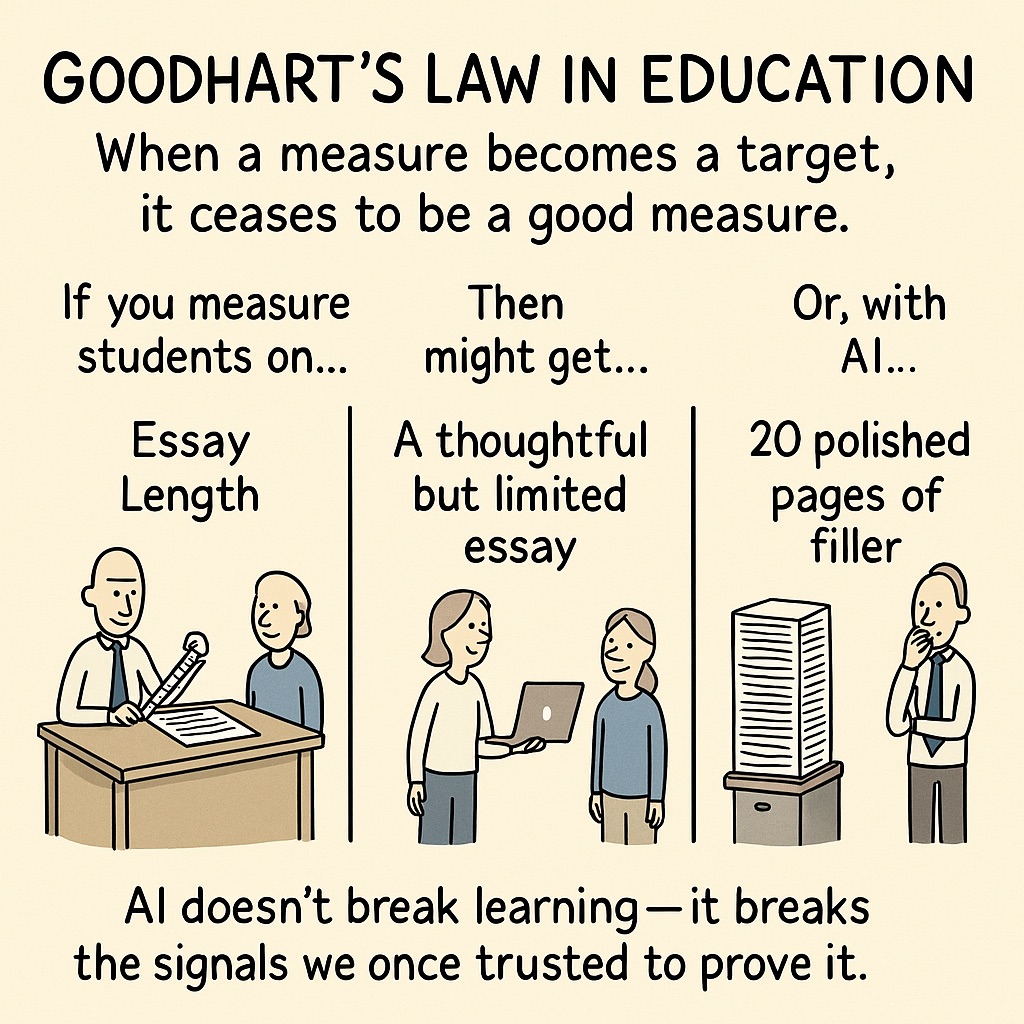
Charles Goodhart’s law sharpens this further: “When a measure becomes a target, it ceases to be a good measure.” Schools have always faced the challenge of students gaming rubrics and tests, but AI accelerates the process to an industrial scale. Once assessment criteria become explicit targets, AI can optimize to them perfectly — delivering outputs that meet the form while bypassing the substance.
Together, these dynamics create a double collapse: signals lose their cost (Spence), and measures lose their validity (Goodhart). What remains is not a breakdown of learning itself, but a breakdown of the currency of proof schools have relied on to certify it.
Two Sides of the Same Coin
Neither AI nor schools are broken, and neither is malicious — they are simply misaligned. Both want learning to flourish, but one anchors its authority in validated struggle, the other in frictionless progress. Both serve essential functions that society needs.
Schools cannot abandon standards-based validation without losing their institutional purpose. AI cannot embrace traditional friction without abandoning its promise of universal and accessible learning. Each system cannot exist in its current form without rejecting the core value of the other.
The deeper friction lies in their origins. Schools evolved around scarcity — limited expert attention, finite resources, and the need to allocate opportunity fairly. AI emerged from abundance — infinite availability, personalized responses, and the assumption that barriers should be eliminated rather than managed.
The war continues not because either side is wrong, but because both are right in ways that don’t yet fit together. And perhaps that’s the most honest place to end: acknowledging that this tension exposes something fundamental about the challenge of validating human learning in an age when the boundaries between individual and augmented capability are dissolving.
Two sides of the same coin, both serving learning, unable to align their definitions of what learning looks like when it’s working.